
Do ‘Perfect Breasts’ Exist? Here’s What Research Actually Shows
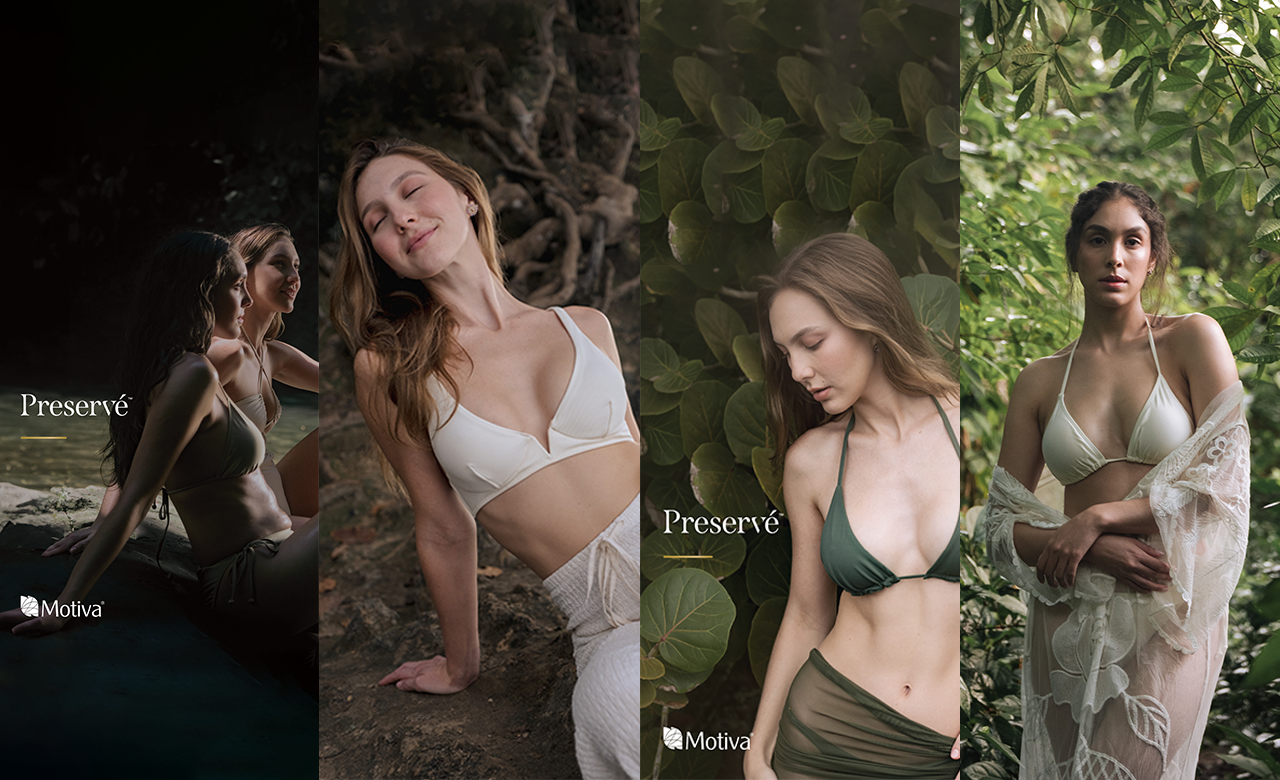
Preservé by Motiva
For a long time, I assumed there had to be a standard - some universal ideal quietly agreed upon by surgeons, influencers, and glossy magazine covers. Rounder, fuller, lifted, symmetrical … you know - THE checklist.
But the more I looked into it (and spoke to people who’ve actually considered or undergone breast procedures), the more obvious it became that a universal ideal for the “perfect breasts” just does not exist (unfortunately for the men or fortunately for the women?) and I’ll show you why.
The Myth of a Universal Ideal
The idea of the “perfect” breasts has fascinated cultures, artists, and medical professionals for centuries. From classical sculptures to modern media, the female form - particularly the breasts - has often been idealised, scrutinised and redefined according to shifting social standards.
Yet, despite the abundance of imagery and opinion, the concept of perfection in breast aesthetics is far from fixed. It is shaped by a combination of biology, proportion, personal identity, cultural influence, and increasingly, advances in medical technology.
If you search online, you’ll find endless charts and ratios claiming to define perfection. Some reference proportions like a 45:55 upper-to-lower fullness ratio. Others obsess over nipple position or cleavage distance.
The problem? These “standards” are often based on narrow datasets, Western beauty ideals, or even computer-generated averages. On top of this, how many women actually have perfect breasts? And if so few attain this “perfection” would it not simply be an ideal that was never meant to be? Would it not be more accurate, homo sapien-wise, to assimilate all the breasts there are in the world in terms of size, fullness and placement, chart out a bell curve, and definitively state that those who are in the top percentiles are considered the cream (no pun intended) of the crop, and be naturally what is achievable and thus “perfect” for the human body?
In addition to the complexity of determining the bell curve(ature) for breasts via science, historically as well, the notion of perfect breasts has varied widely. Interestingly, breast aesthetics are not just biological - they are cultural artifacts.
Ancient Greece celebrated small, high-set breasts while in Renaissance Europe, fuller figures symbolised fertility and wealth. In the late 20th century, Western media popularised a more exaggerated, high-volume aesthetic.
Geography also plays a role. Western cultures have often leaned toward fuller, more pronounced shapes, while many Asian preferences favour subtlety, proportion and a natural silhouette. Across Asia, this preference for refinement over exaggeration is particularly pronounced and is directly influencing how modern augmentation techniques are being developed and adopted.
The Psychological Dimension
In addition, perceptions of “perfect” breasts are deeply personal. For many women, the desire for enhancement is not about conforming to societal ideals but about restoring confidence.
Common motivations include addressing naturally small or underdeveloped breasts, restoring volume after pregnancy and breastfeeding, correcting asymmetry and improving body proportion.
So … Can Perfect Breasts be Engineered?
Human bodies are inherently asymmetrical, and what appears ideal on one individual may look disproportionate on another. For years, the beauty industry sold the idea that perfection could be engineered - a measurement to achieve, a look to replicate.
But the evidence now suggests otherwise. Breasts are not simply aesthetic objects. They are tied to identity, health, movement, and emotional well-being. Satisfaction with them can influence how a woman lives, feels, and engages with the world.
Clinical and aesthetic studies now converge on a central idea: there is no universally ideal breast. Preferences vary not only across cultures, but between individuals, age groups, and even stages of life. What appears “perfect” is less about absolute size or shape, and more about proportion, context, and personal perception.
And perhaps most importantly, satisfaction is not dictated by how breasts look, but by how women feel about them.
The Science of Attraction: What Studies Actually Say
Even if perfection is subjective, patterns still emerge in what people tend to find aesthetically pleasing.
1. Proportion Over Size
Contrary to popular belief, size is not the dominant factor. Research consistently shows that moderate-sized breasts are generally preferred over extremes, whether very large or very small. What matters more is how the breasts relate to the rest of the body - particularly the waist-to-hip ratio and overall frame. Balance, not volume, is key.
2. Shape Matters More Than You Think
Among surgeons and researchers, the teardrop shape remains a gold standard - fuller at the bottom, gently sloping at the top. This mimics natural anatomy and is often perceived as more youthful and less artificial. However, newer studies suggest a growing appreciation for upper fullness, reflecting changing aesthetic preferences influenced by media and modern beauty trends.
3. Symmetry, But Not Perfection
Symmetry is associated with attractiveness, but perfect symmetry is neither realistic nor necessary. Slight asymmetry is normal and often imperceptible. What matters is overall harmony rather than exact duplication.
The Anatomy of Aesthetic Appeal
To understand what contributes to breast attractiveness, it helps to look at anatomy. The breast consists of glandular tissue, fat, connective tissue, and skin, all supported by underlying chest muscles. Factors that influence appearance include:
1. Volume and Fullness
Volume plays a major role, but more is not always better. Many women prefer moderate fullness that enhance their silhouette without appearing artificial.
2. Shape
A natural teardrop shape, fuller at the bottom and gently sloping at the top, is widely considered aesthetically pleasing. This shape mimics the natural distribution of breast tissue.
3. Position
Breasts that sit higher on the chest with a youthful lift are often associated with vitality. However, natural aging and life events such as pregnancy can affect this.
4. Symmetry
Perfect symmetry is rare, but noticeable asymmetry can influence perception. Subtle differences are typically considered normal and even attractive.
5. Skin Quality
Firm, elastic skin contributes to a youthful appearance. Texture, tone, and elasticity all play roles.
A Shift In Aesthetic Goals
There has been a noticeable shift in aesthetic goals over the past few years. Instead of dramatic transformations, many are opting for subtle enhancements that blend seamlessly with their existing shape. They prioritise proportion over size, movement over firmness, comfort over exaggeration, natural feel over obvious augmentation.
Especially in Asia, where smaller frames are more common, overly large implants can look and feel disproportionate. The goal is not to stand out but to feel like a slightly more refined version of yourself. This is reflected in patient demographics as well. Most women seeking breast augmentation in Singapore are between 25 and 44, followed by those aged 45 to 54, often motivated not by transformation, but by restoration and balance.
Here is where newer techniques start to matter.
The Evolution of Breast Augmentation
Breast augmentation has existed since the 1960s, but for decades, the techniques remained largely unchanged. Traditional procedures typically involve general anaesthesia, surgical dissection of tissue or muscle, and is a full-on surgical procedure that will require some rest period for recovery.
While effective, these methods can feel invasive and intimidating, especially for women seeking only modest enhancement and this is precisely where the industry has begun to pivot.
One of the more interesting developments I found in this space is Preservé, introduced by Establishment Labs. It is being positioned as a rethink of how breast augmentation should be done - from the procedure itself to the final result. What stood out to me wasn’t just the technology, but how closely it aligns with what people are actually asking for now: less invasive, more natural, and easier to recover from.
So what’s different?
1. It’s minimally invasive
Instead of the more extensive surgical approaches used traditionally, Preservé uses a small incision at the breast fold. Surgeons then place the implant in a carefully created space between the chest muscle and breast tissue using specialized tools. That might sound technical, but the key point is this: less disruption to your body.
2. It preserves your natural tissue
One of the biggest differences is that the chest muscle isn’t cut. This reduces trauma and helps maintain the integrity of the surrounding tissue. In practical terms, that often means less pain and a smoother recovery.
Enjoying this article?
Subscribe to get more stories like this delivered to your inbox.
3. Sensation is maintained
Loss of nipple sensation is a common concern with breast surgery. Because Preservé preserves the fascia and surrounding structures, it significantly reduces this risk. That alone changes how many people feel about the procedure.
4. It’s quicker and simpler
Traditional breast augmentation can take up to two hours and usually requires general anaesthesia. Preservé procedures are typically shorter—and notably, they can be performed without general anaesthesia. That’s a pretty big shift in how people experience surgery.
5. The results are more subtle
Preservé uses Motiva implants designed for softer, more natural-looking outcomes. Instead of dramatically increasing size, the focus is on enhancing shape and proportion. This is especially appealing for Asian patients, where the preference often leans toward balance rather than volume.
Singapore as a Regional Pioneer
Singapore is the first country in Asia to launch Preservé, making it the third region globally after Europe and South America. Five specialised clinics have been trained and certified in the technique, with the first patients undergoing the procedure in November 2025.
This is significant for several reasons. Breast augmentation already accounts for about 30% of aesthetic procedures in Singapore. Demand has increased by approximately 50% over the past five years and patients in the region strongly prefer natural-looking, proportionate results. Preservé is not just entering the market - it is entering the right market.
The Future of Breast Aesthetics
The evolution of breast augmentation is far from over. Emerging technologies and techniques continue to push boundaries, with a focus on regenerative medicine, fat grafting enhancements, personalised implant design and even AI-assisted surgical planning.
As innovation progresses, the industry is likely to move even further away from standardised ideals and toward individualised solutions.
So… what does make the “perfect” breast?
After all this, the answer is a lot less glamorous … and a lot more realistic. There isn’t a single formula.
Instead, perfection lies in a combination of factors such as harmony with the individual’s body, natural appearance and feel, preservation of function and sensation, alignment with personal goals and lifestyle. It is less about conforming to external standards and more about achieving a result that feels right for the individual.
Techniques like Preservé embody this new philosophy and are reflections of changing attitudes toward beauty, autonomy, and self-expression, representing a shift toward a more holistic understanding of beauty.
As more women seek enhancements that are natural, balanced, and minimally disruptive, the future of breast aesthetics will continue to move in this direction. In the end, perfection is not something to be imposed - it is something to be discovered, shaped by both science and self.
And if someone chooses to enhance what they already have, the best outcomes today aren’t about changing everything, they’re about preserving as much of the natural structure as possible.
Which is why techniques like Preservé feel less like chasing perfection, and more like working with what’s already there … and honestly, that might be the closest thing to “perfect” we’re going to get.
To find out more about Preservé breast augmentation surgery, visit www.preservemotiva.com.
Public Relations