
Trump rewrites the Endangered Species Act—Developers can now destroy habitats without it counting as 'harm'
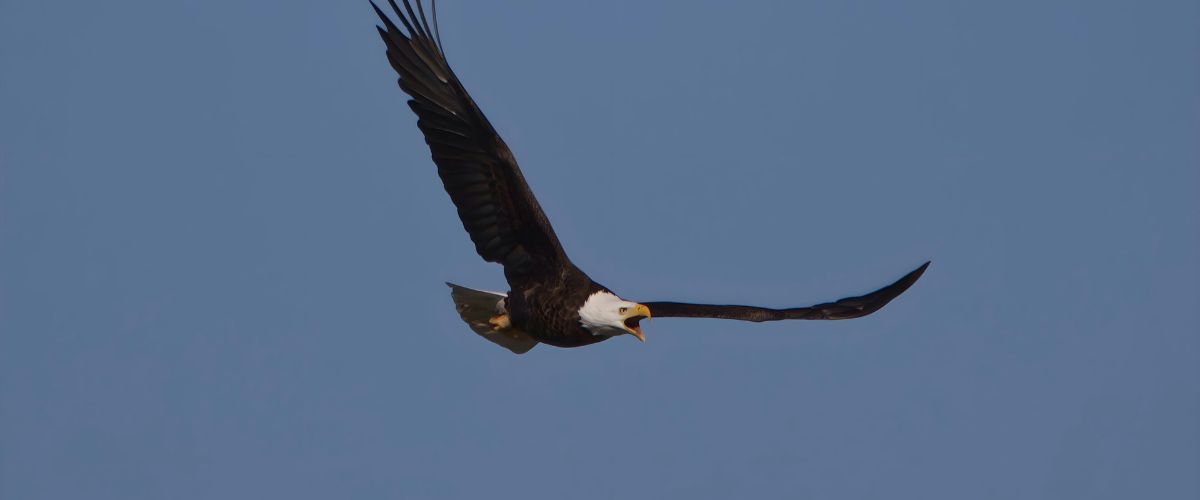
Photo: Bald eagle
USA: The Trump administration has finalised a significant rollback of the United States’ landmark wildlife protection law, redefining what counts as “harm” under the Endangered Species Act in a way that environmental groups say strips meaningful protection from thousands of species.
According to Reuters, the new rule, finalised on Friday, removes habitat destruction from the legal definition of “harm” under the 50-year-old ESA. This means that project developers, energy producers, mining operations, and agricultural interests can now legally impair or destroy the places where protected species live, breed, and feed, as long as they do not directly injure or kill the animals themselves.
What the ESA actually does
The Endangered Species Act has been one of the most consequential pieces of environmental legislation in US history, credited with pulling species including the bald eagle and the California condor back from the brink of extinction. It is a key regulatory consideration for government agencies when granting permits for oil and gas development, mining, electric transmission infrastructure, and other operations on federal lands and water.
Under the previous interpretation of the law, “harm” included habitat modification that significantly impaired the behavioural patterns of protected species, including activities essential to survival such as breeding, feeding, and sheltering.
The new rule narrows that definition to direct injury or killing only, effectively decoupling habitat destruction from the law’s protective reach.
The Departments of Interior and Commerce said the final rule would reduce permitting and compliance costs for energy producers, farms, and fishing interests, and aligns with President Trump’s broader goal of reducing regulations he says constrain American businesses.
“This action restores common sense, respects private property, provides much-needed certainty for landowners and follows the statute Congress actually passed,” Interior Secretary Doug Burgum said in a statement, as reported by Reuters.
Environmental groups say there is “no support” for the rule
The response from conservation and legal advocacy groups was immediate and unambiguous. Earthjustice said it plans to sue, with attorney Kristen Boyles describing the rule as unprecedented in its scope.
“For the first time ever, a presidential administration now claims that species protected by the Endangered Species Act shouldn’t be safe from habitat modification that destroys where they live, raise their young, or search for food,” Boyles said, as quoted by Reuters. “Let’s be clear: there is no support for the Trump administration’s rule — no scientific support, no legal support, no public support.”
The legal challenge is expected to centre on whether the administration’s reinterpretation of “harm” is consistent with the text and intent of the ESA as passed by Congress; it is a question that is likely to end up before the courts, and potentially the Supreme Court, given the significance of the rule change.
Netizens react
The announcement drew an outpouring of responses on Reddit, ranging from raw anger to dark humour to pointed legal analysis.
Many commenters focused on the cumulative weight of the administration’s environmental decisions. “It’s going to take decades to reverse the damage done in these four years,” one netizen wrote, framing the rule change as not just a policy shift, but as part of a longer arc of destruction that will outlast the administration itself.
Another commenter was less measured. “It’s like he’s determined to leave the world as [expletive] a place as possible. Cuts to renewable energy, wilderness areas, education, healthcare research — the only thing he won’t cut is tax dodges and grifting opportunities for billionaires,” they wrote.
Some reactions focused on the person rather than the policy. “Rotten, disgusting, immoral, evil human being. Does he stay up at night thinking of awful things to do?” one user asked pointedly.
One commenter, apparently writing from a birding or conservation background, cut through the legal language to describe what the rule change would actually look like on the ground. “Stripping habitat protections while keeping the direct harm rule intact is just a shell game for industry; everyone knows habitat is the actual issue. Birders will be the ones watching local populations crater in real time while lawyers spend years arguing about what ‘harm’ means in court. Hard to enjoy a morning at the shore knowing what’s coming,” they wrote.
The psychological toll of the news was not lost on everyone. “This is why it’s so hard to be sober in these terrible times,” one commenter wrote simply.
Enjoying this article?
Subscribe to get more stories like this delivered to your inbox.
Finally, one commenter pointed to the legal challenge ahead with a degree of cautious optimism. “It doesn’t change how absolutely insanely stupid this is, but the administration is going to get sued into oblivion on this. It’s going to be a very interesting legal battle, given the previous Supreme Court precedent here,” they noted, pointing out that Earthjustice's planned lawsuit, and the judicial process it triggers, may likely end up being the most consequential part of this story.
Why this matters
The practical implications of the rule change are substantial. According to World Wildlife Fund, habitat loss is widely recognised by scientists as the leading driver of species decline globally. A rule that allows developers to destroy habitat without triggering ESA liability fundamentally changes the calculus for any project that previously had to navigate species protection requirements.
For industries including oil and gas, mining, and large-scale agriculture, the rule removes a significant regulatory hurdle. For species already under pressure from climate change, urban development, and agricultural expansion, it removes one of the few legal mechanisms that required their habitat to be taken into account before a permit was granted.
The administration proposed the rule in April 2025, and its finalisation on Friday, with a legal challenge already filed, sets up what is likely to be a prolonged court battle over the future of one of America’s most significant environmental laws.
Writer