
World Bank upgrades Philippines to upper-middle income status, but millions still struggle
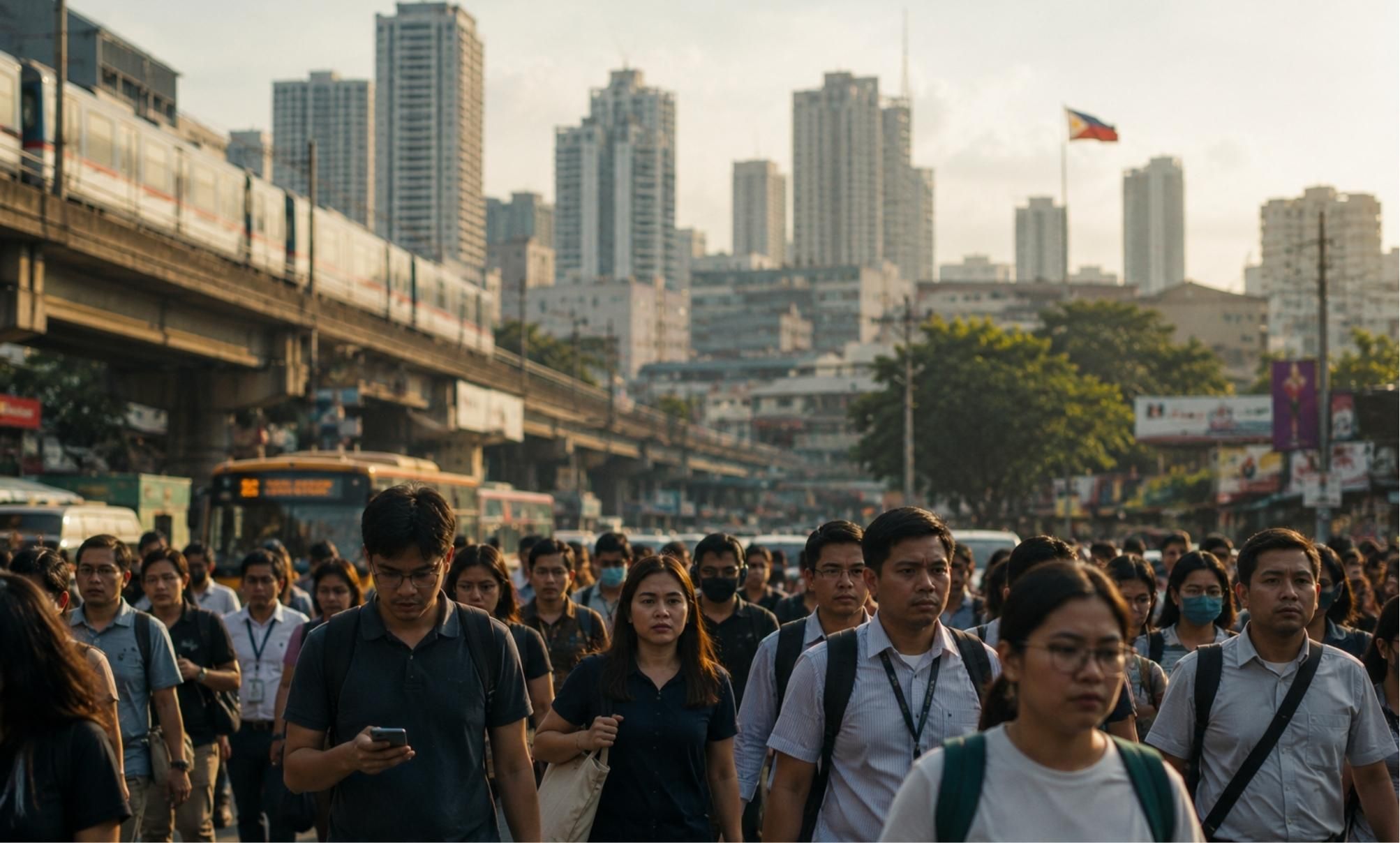
The World Bank upgraded the Philippines to upper-middle income status, although many Filipinos say economic challenges remain part of daily life.
ASIA: On July 1, the World Bank upgraded the Philippines and Vietnam to “upper-middle-income” countries. This puts them on the same level as their Southeast Asian neighbours Indonesia, Malaysia, and Thailand. Jordan, Micronesia, and Sri Lanka were also given a similar upgrade.
The World Bank’s threshold for upper-middle-income economies is a gross national income (GNI) per capita of US$4,636 (S$5,980). The Philippines’ GNI is now at $4,850 (S$6,258), while in Vietnam it’s US$4,970 (S$6,413).
Lee Kuan Yew School of Public Policy professor Khuong Minh Vu called the reclassification of the two countries “a highly encouraging milestone,” adding that “It represents strong international recognition of the development progress achieved by the two economies.”
In the Philippines, President Ferdinand Marcos Jr hailed the upgrade in a social media post, writing that it had come after almost forty years.
“This milestone reflects the hard work of the Filipino people and our commitment to policies that create more jobs, attract more investments and build a stronger economy for every family,” he added.
The sentiment among Filipinos has been less than enthusiastic, however. As the news network Rappler pointed out in an article, millions in the country are struggling amid the high price of goods and underemployment, as well as income inequality. The high cost of housing, especially in bigger cities, has also beset many Filipinos.
The article points out that the upgrade does not equate to broad prosperity and that GNI is the average across the nation and does not represent how income is distributed among Filipino households.
Furthermore, May’s inflation rate in the Philippines was 6.8%, with inflation for food at 5.7%, for transport at 16.2%, and for housing, water, electricity, gas, and other fuels at 7.8%.
On Facebook, the physician and social commentator Tony Leachon wrote, “Rising public debt, uneven job creation, and inflationary risks remind us that prosperity must be built not only on numbers but on inclusive growth.
The challenge ahead: to transform statistical gains into lived realities — jobs that uplift families, investments that empower communities, and governance that ensures no Filipino is left behind.”
Former Solicitor-General Florin Hilbay, meanwhile, wrote, “Does this mean:
—that the number of middle-class Filipinos increased? No.
—that low-income Filipinos decreased? No.
—that life in the Philippines has become more affordable? No.
Enjoying this article?
Subscribe to get more stories like this delivered to your inbox.
—that Filipinos are healthier or happier?No.”
“Even if the data indicates that we have reached upper-middle-income status based on World Bank metrics, this does not truly reflect the lives of ordinary Filipinos. The data is based on GDP and capital flows—regardless of the source—because the model itself assumes that wealth trickles down,” wrote another Facebook user.
“Wealth is concentrated in the hands of a few, while the masses remain poor. Ideally, wealth would trickle down to everyone through increased opportunities. However, access to quality education and healthcare—which are expected to serve as equalisers—remains insufficient to uplift the lives of the majority of Filipinos. For most Filipinos, the rich keep getting richer, and the poor keep getting poorer,” observed another. /TISG
Read also: Housing stress higher in Philippines than Singapore, Hong Kong, survey shows
Senior Writer