
As Vietnam Scales Up, Singapore Must Move Up the Value Chain

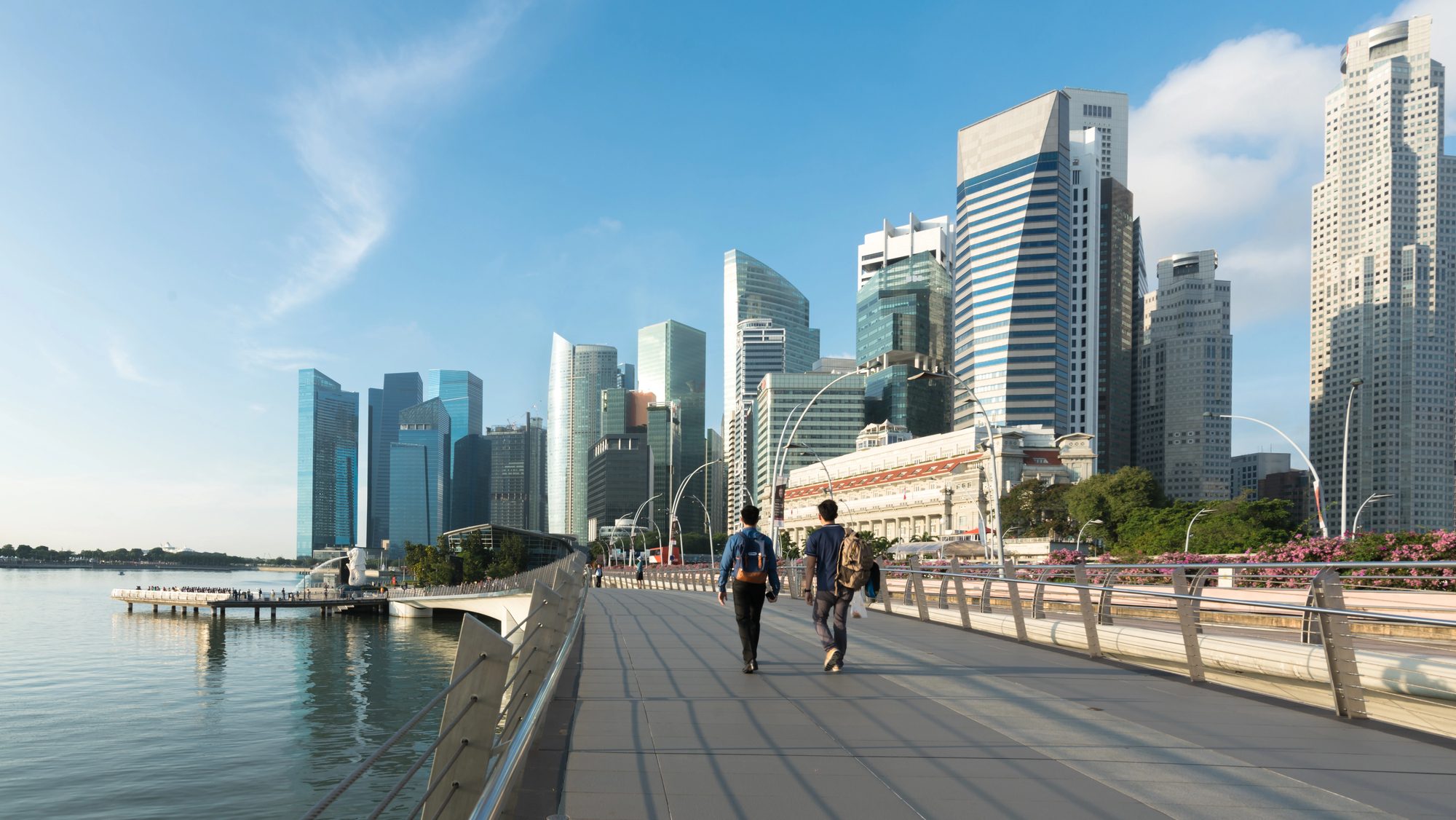
Singapore Waterfront
By Nguyen Canh Binh
As Southern Vietnam scales into a manufacturing-and-port powerhouse, Singapore’s future lies not in competing on size, but in defining the legal, financial and governance standards that keep the region’s trade network running.
Singapore is entering a phase in which “hub advantage” is no longer a default condition, but a capability that must be continuously recreated amid a fragmented global trading environment. That matters especially for a small, trade-dependent, transshipment economy such as Singapore, whose leaders have repeatedly warned that a weakening international trading system poses serious risks to open economies like ours.
Right in Singapore’s immediate backyard, Vietnam is shaping a new mega-regional entity: a “new Ho Chi Minh City” formed through the merger of Ho Chi Minh City, Binh Duong, and Ba Ria–Vung Tau. This is not merely an administrative redrawing of boundaries. It is an attempt to combine, within a single enlarged economic space, a finance and services core, an industrial belt, and a deep-water port cluster. Since the merger took effect on July 1, 2025, Vietnamese official and state-linked reports have described the expanded city as a major economic pole contributing roughly a quarter of national GDP and a very large share of state revenue.
This matters because Singapore has long functioned as the region’s switchboard, coordinating high-value activities such as finance, marine insurance, legal services, trade finance, and risk management. These are functions that depend less on physical size than on trust, standards, and institutional credibility. Singapore’s total population stood at 6.11 million as at June 2025, while its 2024 nominal GDP was about US$547.4 billion, underscoring the reality that the city-state’s edge lies not in industrial scale, but in coordination capacity.
By contrast, the expanded Ho Chi Minh City is emerging as a processing hub: a large territorial platform that can combine manufacturing, logistics, port activity, warehousing, and export processing under a more integrated governance structure. In other words, Southeast Asia may be moving away from a model dominated by one overwhelming hub and toward a network of hubs with differentiated functions.
Singapore’s challenge, therefore, is not to compete head-on in land-intensive industry, but to reposition itself within the value chain under a networked-hub model. Singapore should aim to retain the upper tier of the regional system, finance, insurance, arbitration, legal standards, risk governance, and logistics-data standards, while Southern Vietnam takes on more of the processing layer: manufacturing, ports, warehousing, and industrial services. The strategic objective is for Singapore to anchor the rules of the game, so that the capital flows, contracts, insurance frameworks, trade finance structures, and dispute-resolution mechanisms surrounding this wider production network continue to run through standards that Singapore helps define.
Enjoying this article?
Subscribe to get more stories like this delivered to your inbox.
From there, Singapore should prioritize three directions. First, it must shift from simply attracting flows to setting the standards for flows, whether through applicable law, insurance architecture, trade-finance norms, or cross-border data protocols. Second, it should treat the new Ho Chi Minh City as a supply-chain finance and digital-logistics opportunity, exporting not goods but coordination capability. Third, it should invest more deeply in the soft infrastructure of the network: compliance systems, legal frameworks, data governance, and trusted dispute-resolution mechanisms. In a more fragmented world, the hub that endures will not be the one that handles the most cargo, but the one that writes the rules by which the region moves.
Nguyen Canh Binh is the Founder & Chairman of AlphaBooks and Founder of ABG Leadership Institute. He works at the intersection of publishing, leadership, and human capital development in Vietnam.
Contributing writer at The Independent News