
Bangladesh’s ‘Venice’ Comes Alive in the Monsoon — and Most Travellers Still Haven’t Heard of It
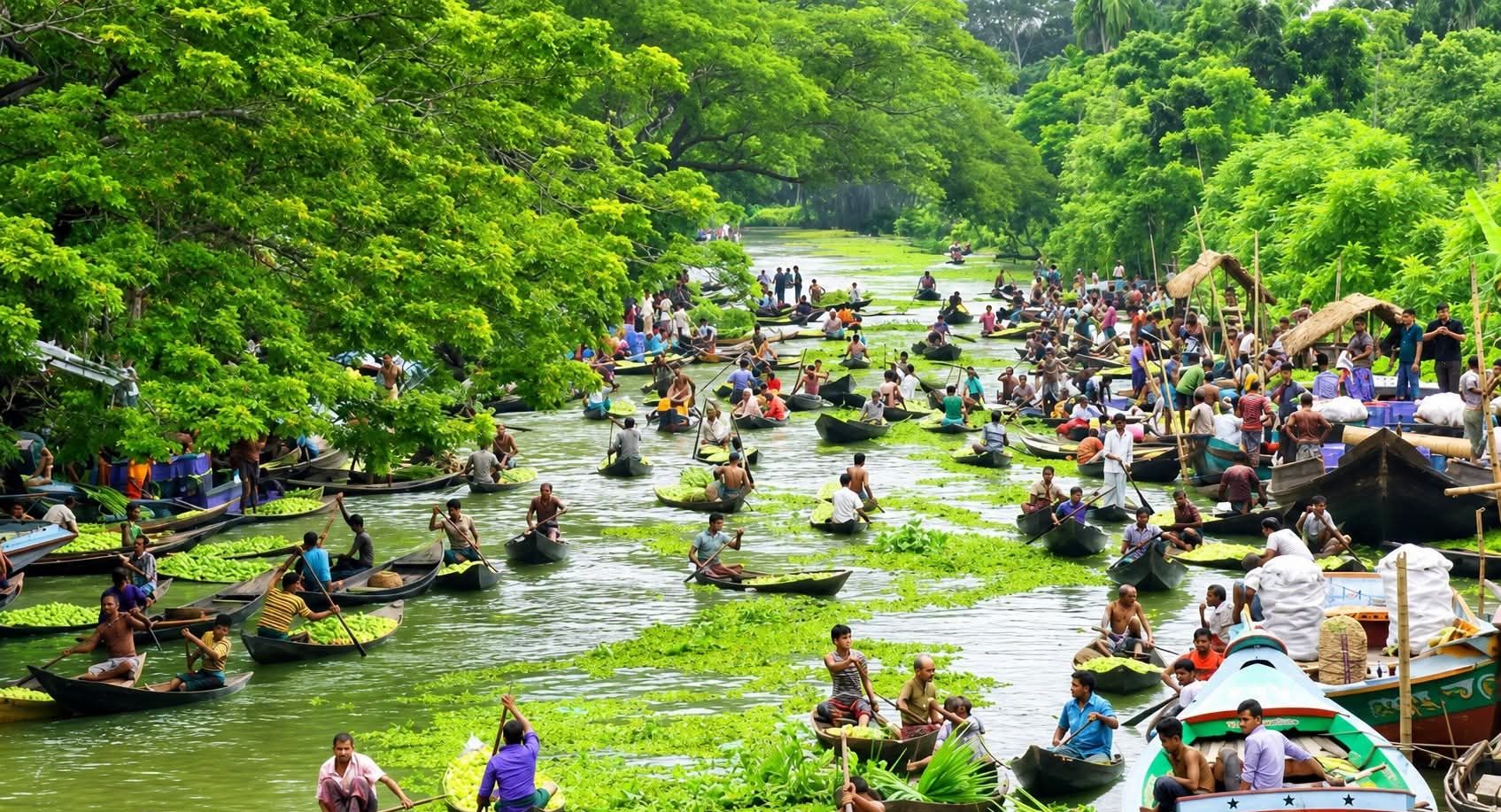
Bhimruli’s famous floating guava market in Jhalokathi comes alive during the monsoon, as farmers and traders bring their fresh harvest to market by boat.
When people think of Bangladesh, they usually picture one of the world’s largest river deltas, busy cities and wide, fertile floodplains, but there is another side of the country that many travellers still haven’t discovered.
It is Bhimruli, a quiet village in Jhalokathi district where the arrival of the monsoon changes everything. The waterways fill up, small wooden boats take the place of shopfronts, and the canals become the centre of daily life.
Locals often call Bhimruli the “Venice of Bengal”. The area is part of one of Asia’s largest guava-growing regions and is home to a seasonal floating market that offers a close look at a way of life shaped by water rather than roads.
When the monsoon rains swell the narrow canals, hundreds of small country boats move between orchards heavy with fresh guavas. Farmers bring their harvest straight onto the water, while traders move from boat to boat, negotiating prices before taking the fruit on to markets across Bangladesh. It feels less like a tourist attraction and more like what it really is: a working market that has grown naturally over generations.
If you want to see it at its liveliest, go early in the morning. Between 9 a.m. and 10 a.m., there is a constant rhythm of bargaining, loading, and unloading. By late morning, sightseeing boats start to outnumber the trading vessels, and the character of the market slowly changes from commerce to tourism.
For a quieter trip, many visitors choose traditional wooden boats from Adamkathi Ghat instead of larger motorised launches. Moving slowly through the shaded canals gives you time to take in the landscape—green orchards stretching along the waterways, birds calling from the trees, reflections moving across the water, and villages whose lives remain closely tied to the seasons.
Nearby Kuriana has another attraction worth a stop: Peara Park. Its watchtower looks out across miles of orchards and waterways and has become a favourite spot for photographers and families exploring the area.
The scenery is beautiful, but it is worth remembering that this is also a working landscape. Hornets sometimes build nests in branches hanging over the canals, and boatmen advise visitors not to disturb the trees. Orchard owners also ask travellers not to pick fruit without permission. These are working farms, after all, not open parks.
And then there is the food. No trip to the area feels complete without trying some of the local dishes. Small eateries in Kuriana serve traditional Bangladeshi meals featuring freshwater fish, while local sweet shops make fresh rasgullas that have become favourites with returning visitors.
Enjoying this article?
Subscribe to get more stories like this delivered to your inbox.
From Dhaka, the journey can be made by road before continuing to Bhimruli by local transport and boat. The monsoon season, particularly from July to September, is generally considered the best time to visit, when the canals are full, and the floating market is at its busiest.
For international travellers looking beyond the usual destinations in the guidebooks, Bhimruli offers something that is becoming harder to find: a living cultural landscape where farming, waterways, and community still shape everyday life.
It is certainly a beautiful place to photograph, but that is only part of its appeal. Spend some time there, and you begin to see that Bhimruli is not a place built for tourists. It is a place where people have lived and worked with the water for generations—and that is what makes the experience feel so genuine.
Contributing writer at The Independent News