
Purnendu Kishore Sengupta: A Life Devoted to the People and the Freedom Struggle
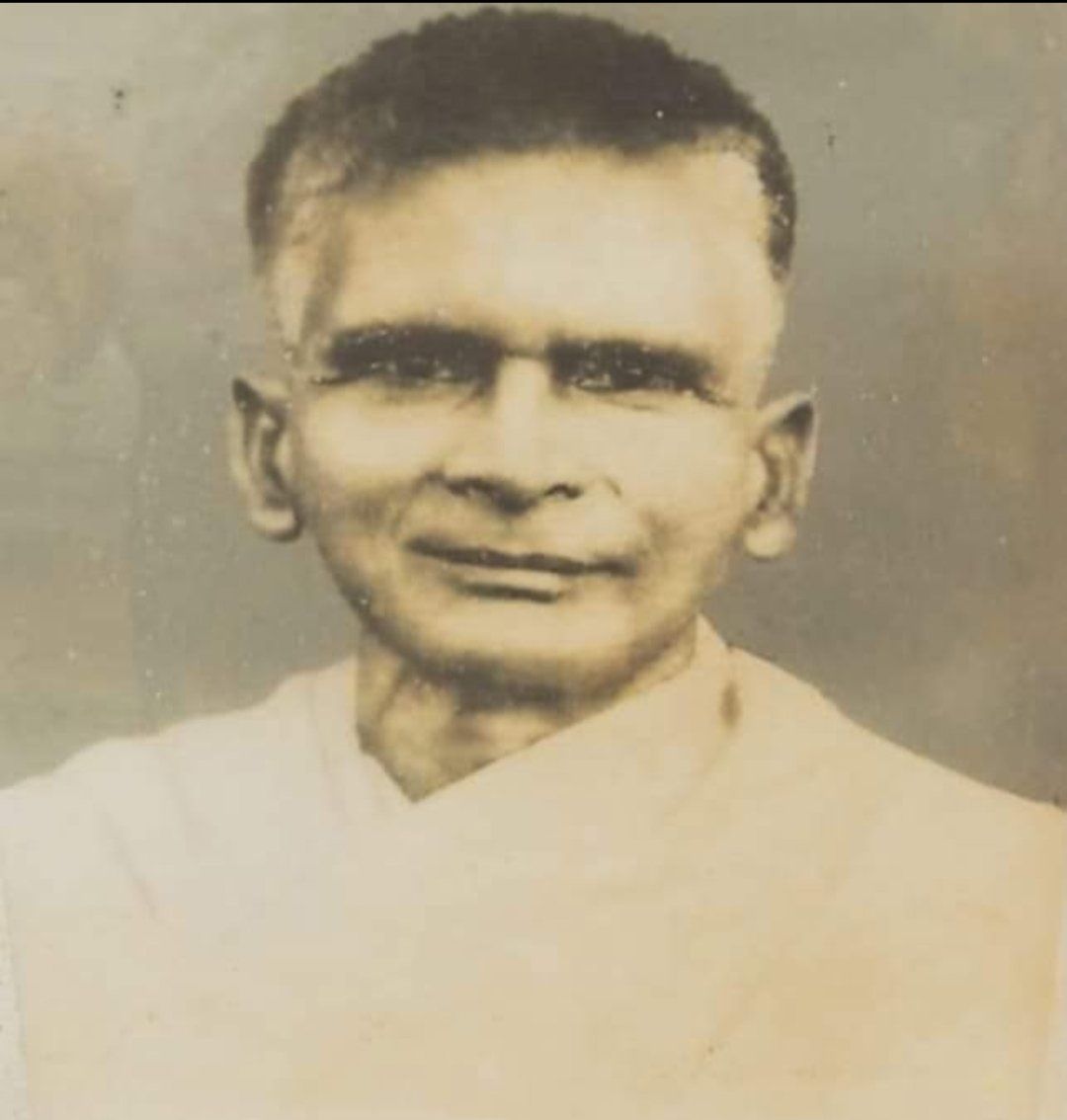
Purnendu Kishore Sengupta, a lifelong freedom fighter, political leader and champion of workers and peasants rights.
If you ask about the people who played a determined role in India’s freedom struggle, Purnendu Kishore Sengupta is a name that deserves to be remembered. He was much more than a politician. He worked among ordinary people, led labour and peasant movements, stood beside those in distress, and remained involved in the anti-British movement through different stages of the struggle. His life was, above all, a story of struggle, service and a firm commitment to people’s rights.
Purnendu Kishore Sengupta was born in 1895 in Banar, Dhaka. His father, Shyam Kishore Sengupta, was a prominent lawyer at the Sylhet Judge’s Court. While still young, Purnendu became associated with the practice association branch established by revolutionary Nagen Dutta in Sylhet.
Later, while studying for his B.Sc. at Dhaka University, he came into contact with Acharya Prafulla Chandra Ray. That association helped deepen his political awareness. During his M.Sc. studies, he joined the Non-Cooperation Movement and even boycotted his examinations. It was an early indication of how strongly he felt about the political causes of his time.
In 1922, Purnendu joined the Dhaka Abhoy Ashram branch and became editor of the Vidyashram established by Dhirendranath Dasgupta in Banar, Bikrampur. His work did not stop at political activity. He became involved in welfare programs, riot prevention, relief work and various forms of social service.
When flooding from the Padma River threatened the Vidyashram, he moved it to Sylhet and renamed it Rangirkul Vidyashram. In time, the ashram became an important center for Gandhian activities.
He took part in the Salt Satyagraha in 1930 and was imprisoned for his involvement. In 1932, he founded the Sylhet Women’s Association. He also led the historic Satyagraha of Manipuri peasants in the Bhanu Bil region. His efforts eventually helped push the government toward enacting the People’s Rights Act.
Those who needed help were another important part of his life. During the 1929 floods in Sylhet and Cachar, he worked in relief efforts. During World War II, he helped refugees arriving from Burma. In 1935, he organized an art exhibition to mark the Golden Jubilee of the Indian National Congress.
Rangirkul Vidyashram perhaps best reflected the range of his work. It was not simply a place for education. Arts, social service and political awareness came together there, making the ashram a living expression of the ideas he believed in.
Purnendu Kishore also became an important political figure. In the last elections of British India in 1946, he was elected as a member of the Assam Managing Committee. After Partition, he chose to remain in East Pakistan and focused much of his attention on the rights of tea workers.
On June 3, 1948, he founded the Sylhet Tea Workers’ Union in Kulaura. He served as its founding president. MLA Jiban Sawtal was the vice president, Nikunj Bihari Chowdhury was the general secretary, and Dorges Dev was the organisational secretary. The union later became known as the “Bangladesh Tea Workers’ Union.”
In 1954, Purnendu Kishore was elected to the Pakistan Parliament from Moulvibazar on a United Front ticket. In 1964, he was re-elected by a landslide from the Kulaura-Rajnagar constituency. Even when the Tea Workers’ Union was banned during Ayub Khan’s regime, he did not back away from his work.
Enjoying this article?
Subscribe to get more stories like this delivered to your inbox.
The events of 1971 brought another difficult chapter. Pakistani forces attempted to assassinate him, forcing him to move to India. There, he continued to support the freedom fighters.
Purnendu Kishore Sengupta died on November 17, 1978, at Rangirkul Ashram in Kulaura.
Looking back at his life, what stands out is the consistency of his commitment. He moved between political activism, education, relief work and the struggle for the rights of laborers and peasants, but the people he worked for remained at the center of it all.
His legacy lives on through Rangirkul Ashram and the Sylhet Tea Workers’ Union. More than anything, his life offers a simple lesson: leadership is not just about holding a position. It is about standing with people, especially when doing so is difficult, and remaining committed to justice and service without losing sight of why the struggle began.
Contributing writer at The Independent News