
Singapore: The Tiny Island That Rewrote the Rules of Nation-Building
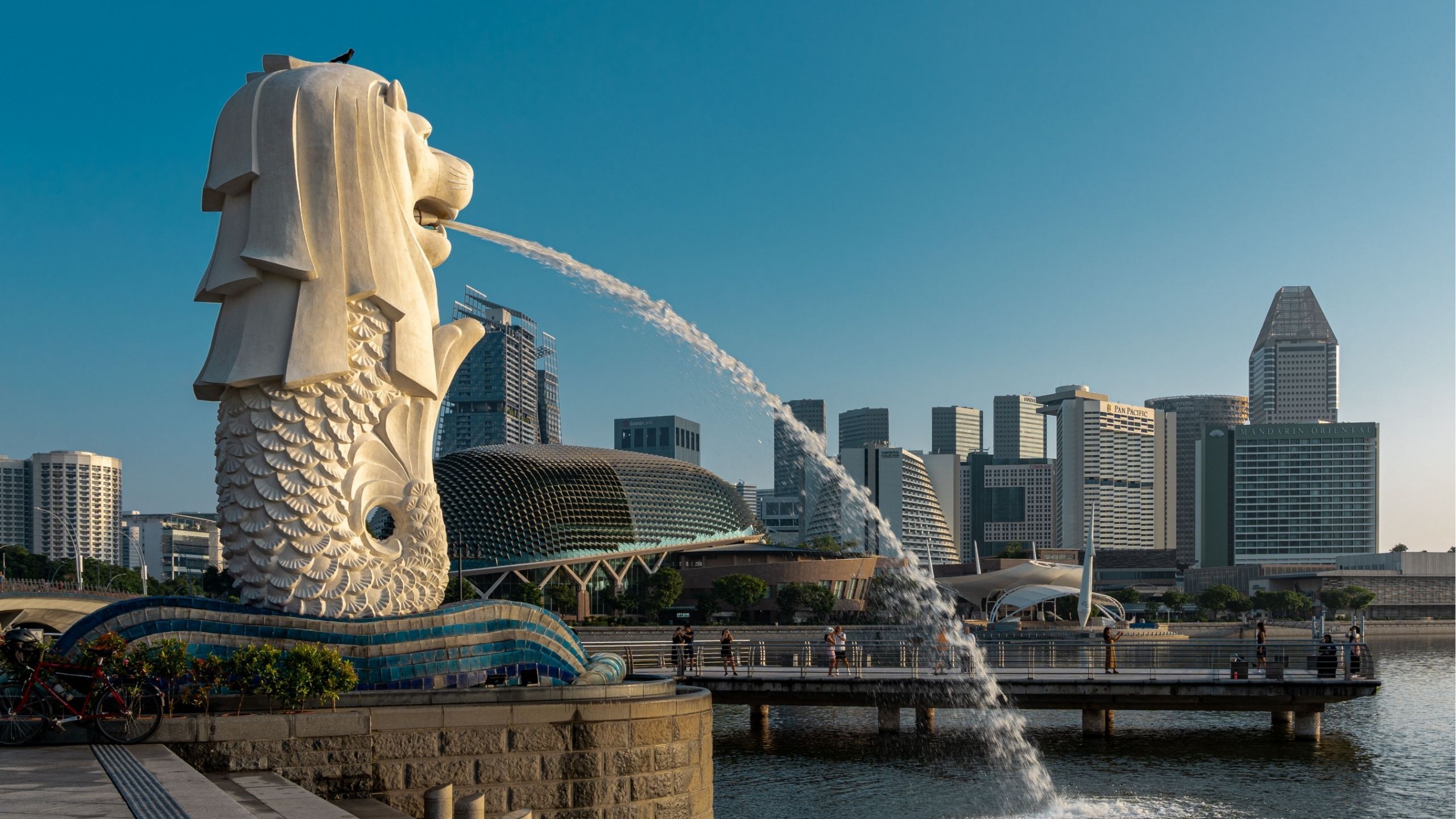
Iconic Merlion statue with Singapore skyline under clear blue sky, showcasing modern architecture and city's charm.
Few countries have transformed themselves as dramatically as Singapore. In just six decades, a resource-poor island expelled from a federation it had hoped would secure its future has become one of the world's richest, safest and most technologically advanced nations. Today, Singapore consistently ranks among the global leaders in income, education, infrastructure, healthcare, logistics and public administration.
Its success did not emerge by accident. It was the result of long-term planning, political discipline, institutional continuity and a willingness to make difficult policy choices. Yet Singapore's story is also more complicated than the familiar tale of economic miracle. Behind the gleaming skyline lies a state that has balanced rapid development with strict laws, social engineering, limited political pluralism and an unusually interventionist government.
Understanding modern Singapore requires understanding both its remarkable achievements and the debates surrounding the methods used to achieve them.
From colonial trading post to uncertain nation
Singapore's modern history began in 1819, when Sir Stamford Raffles established a British trading post on the island for the British East India Company. Its strategic location along one of the world's busiest maritime routes quickly transformed it into a commercial hub linking Europe, India, China and Southeast Asia.
Throughout the nineteenth century, immigrants from China, India and the Malay Archipelago arrived in large numbers. Raffles' town plan divided communities into distinct ethnic quarters, including Chinatown and Kampong Glam, creating a multicultural society that still shapes Singapore today.
Trade flourished after the opening of the Suez Canal in 1869, but prosperity was interrupted by the Second World War. Japan occupied Singapore between 1942 and 1945 after defeating British forces in one of Britain's greatest military defeats in Asia. The occupation left deep psychological scars and undermined confidence in colonial rule.
After the war, Britain gradually expanded self-government. In 1959, Singapore held its first fully elected government under internal self-rule, with Lee Kuan Yew becoming Prime Minister. The island joined Malaysia in 1963 but separated two years later amid political and ethnic tensions. On August 9, 1965, Singapore became an independent republic.
The outlook appeared bleak. It lacked natural resources, faced high unemployment, widespread poverty and severe housing shortages, while British military bases—which supported thousands of jobs—were scheduled for closure.
Building an economy from geography
Singapore could not depend on oil, minerals or vast agricultural land. Instead, its leaders built an economy around what the country did possess: location, stability and human capital.
The government rapidly industrialised the economy through the Economic Development Board, offering tax incentives to multinational corporations while investing heavily in infrastructure. Manufacturing expanded into electronics, petrochemicals and precision engineering before Singapore diversified into finance, biotechnology, logistics, aviation and digital services.
Its port became one of the busiest in the world, while Changi Airport evolved into a global aviation hub. Singapore Airlines built a reputation for excellence, and state-owned investment company Temasek Holdings became an influential international investor. The Monetary Authority of Singapore developed one of Asia's most respected financial regulatory systems, attracting global banks and asset managers.
Unlike many developing nations, Singapore maintained relatively prudent public finances. Budget deficits were generally limited, substantial financial reserves accumulated, and compulsory savings through the Central Provident Fund (CPF) helped finance retirement, housing and healthcare while contributing to exceptionally high national savings rates.
A state that built homes—and communities
Perhaps Singapore's most visible achievement is housing.
Through the Housing & Development Board (HDB), the government transformed overcrowded slums into modern high-rise estates. Today, the overwhelming majority of Singaporean citizens live in HDB apartments, many of which are owner-occupied through CPF financing.
Housing policy also became a social policy. Ethnic quotas introduced under the Ethnic Integration Policy were designed to prevent residential segregation and reduce the risk of communal tensions. While sometimes criticised for limiting individual choice, supporters argue that these policies have helped sustain racial harmony in one of Asia's most diverse societies.
Public transport, urban planning and environmental management followed a similarly long-term approach. Strict land-use planning, efficient metro systems, green spaces and careful water management have made Singapore one of the world's most liveable cities despite its limited land.
Turning scarcity into strength
Water has always been one of Singapore's greatest vulnerabilities.
For decades, the island depended heavily on imported water from neighbouring Malaysia. Rather than accepting permanent dependence, successive governments invested billions in diversifying water supplies.
Today, Singapore's "Four National Taps" strategy combines imported water, local reservoirs, desalination and NEWater—high-grade recycled water purified through advanced treatment technologies. NEWater now supplies a substantial share of Singapore's water demand, demonstrating how technological innovation can address geographical constraints.
This approach reflects a broader philosophy: where natural advantages are absent, engineering, planning and investment must compensate.
Education, skills and social mobility
Singapore's education system is frequently cited among the world's strongest. Investment in teacher training, curriculum development and technical education has created a highly skilled workforce capable of adapting to changing industries.
Vocational education enjoys far greater prestige than in many countries, while lifelong learning programmes encourage workers to continuously upgrade their skills.
Healthcare follows a mixed financing model combining government support with personal responsibility through MediSave, insurance schemes such as MediShield Life and safety-net programmes for lower-income citizens. This has enabled Singapore to achieve excellent health outcomes while keeping overall public healthcare spending comparatively modest.
Fighting corruption—and demanding accountability
One pillar of Singapore's success has been its reputation for clean government.
The Corrupt Practices Investigation Bureau possesses extensive investigative powers, and corruption offences carry severe penalties. Civil servants receive competitive salaries intended to reduce incentives for bribery, while public institutions operate with relatively high levels of administrative efficiency.
Singapore consistently ranks among the least corrupt countries in international indices. For businesses, predictable regulation and efficient bureaucracy have become major competitive advantages.
Security first
National security has been another defining priority.
National Service, introduced in 1967, requires most male citizens and permanent residents to serve in the armed forces, police or civil defence. Given Singapore's small population and complex regional environment, leaders viewed universal conscription as essential to deterrence.
The government has also adopted a proactive counter-terrorism strategy. Authorities monitor extremist activity closely, while the Internal Security Act permits detention without trial in specific national security cases. Officials argue these powers have prevented attacks and disrupted extremist networks, including individuals influenced by ISIS and far-right ideologies.
Public campaigns such as SGSecure encourage citizens to report suspicious behaviour, prepare for emergencies and strengthen community resilience.
Enjoying this article?
Subscribe to get more stories like this delivered to your inbox.
Critics, however, question whether broad security powers provide sufficient judicial oversight. The balance between civil liberties and national security remains one of the most debated aspects of Singapore's governance.
Human rights: admiration and criticism
Singapore's governance model attracts both praise and scrutiny.
International observers often commend its efficient public administration, low crime rates, economic opportunity and high quality of life. At the same time, organisations including Amnesty International and Human Rights Watch have criticised restrictions on freedom of expression, public assembly and certain political activities, as well as the continued use of capital punishment for specific offences.
Supporters argue that these policies have contributed to stability, social order and investor confidence. Critics contend that prosperity should not come at the expense of broader political freedoms.
Both perspectives form part of any balanced assessment of modern Singapore.
Why Singapore feels different
Visitors often notice something unusual: public spaces are remarkably clean, transport runs on time, crime rates are among the world's lowest and government services are generally efficient.
This environment is not simply the product of culture. It reflects decades of planning, strict enforcement, investment in infrastructure and clear institutional priorities.
Heavy taxes and quotas discourage excessive private car ownership, making public transport more attractive. Littering, vandalism and other public-order offences carry significant penalties. Green spaces are integrated into urban development, reinforcing Lee Kuan Yew's long-standing vision of Singapore as a "City in a Garden."
Combined with strong healthcare, quality education, affordable public housing and stable employment, these policies have contributed to a standard of living that many Singaporeans regard as both secure and comfortable.
Lessons beyond Singapore
Singapore cannot simply be copied. It is a city-state with unique geography, a relatively small population and institutions built over decades under exceptional political continuity.
Yet its experience offers broader lessons. Effective institutions matter. Long-term planning matters. Investment in education matters. Combating corruption matters. Infrastructure matters. Social cohesion matters.
Singapore demonstrates that a nation without natural resources can achieve extraordinary prosperity if it develops its people, protects the rule of law in commercial affairs, maintains competent public institutions and continually adapts to global economic change.
Its rise is neither a miracle nor an accident. It is the outcome of deliberate choices—some widely admired, others vigorously debated. That combination of extraordinary success and enduring controversy is precisely what makes Singapore one of the most fascinating countries of the modern era.
Contributing writer at The Independent News